
Product Overview
The BENTLY 3500/05-01-01-01-00-00 is a critical component of Bently Nevada’s 3500 monitoring system, serving as a Rack Interface Module (RIM). This module is designed to provide the essential interface between the 3500 monitoring framework and external communication processors, enabling seamless data exchange and system configuration. As part of the 3500 series, which is widely recognized for its robustness and reliability in industrial machinery protection, the BENTLY 3500/05-01-01-01-00-00 plays a pivotal role in ensuring the continuous and accurate monitoring of rotating machinery in industries such as power generation, oil & gas, and manufacturing.
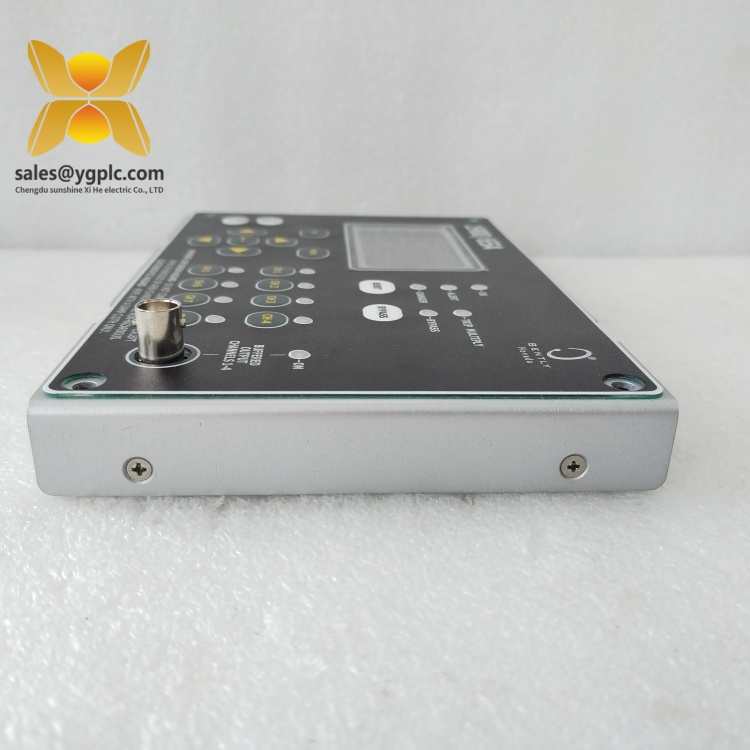
The BENTLY 3500/05-01-01-01-00-00 is installed in the first slot of the 3500 rack, adjacent to the power supply module. It supports Bently Nevada’s proprietary protocols for framework configuration and data retrieval, allowing operators to access critical machinery health information through compatible software like Bently’s System 1®. The module features RS-232 serial interfaces on both the front and rear panels, facilitating easy connection to host computers for data acquisition and system setup. Its front-panel LEDs provide real-time status indicators, including OK, TX/RX, CONFIG OK, and a framework reset button, enhancing usability and troubleshooting efficiency.
What sets the BENTLY 3500/05-01-01-01-00-00 apart is its compatibility with a wide range of 3500 series modules, including vibration monitors, relay modules, and transient data interfaces. This flexibility allows it to be integrated into diverse monitoring setups, from basic machinery protection to advanced predictive maintenance systems. Its robust design ensures stable operation in harsh industrial environments, with resistance to electromagnetic interference and temperature extremes, making it a trusted choice for critical applications.
Technical Specifications
| Parameter | Value |
|---|---|
| Product Model | BENTLY 3500/05-01-01-01-00-00 |
| Manufacturer | Bently Nevada (Baker Hughes) |
| Product Type | Rack Interface Module (RIM) |
| Communication | RS-232 (Front & Rear Panels) |
| Power Supply | Integrated with 3500 Rack Power |
| Operating Temperature | -20°C to +70°C |
| Dimensions | 160 x 140 x 50 mm |
| Mounting | DIN Rail or Panel Mount |
| Protocol Support | Bently Nevada Proprietary |
| Front Panel LEDs | OK, TX/RX, CONFIG OK |
| Reset Function | Framework Reset Button |
| Addressing | DIP Switch for Frame Addressing |
Key Features and Benefits
The BENTLY 3500/05-01-01-01-00-00 offers several key features that enhance its value in industrial machinery monitoring. Its dual RS-232 interfaces provide flexibility in connecting to host computers, whether for local configuration or remote monitoring. The front-panel LEDs offer real-time feedback on the module’s status, including communication activity and configuration correctness, reducing downtime due to misconfiguration.
Another significant advantage is the module’s compatibility with Bently Nevada’s 3500 series ecosystem. It supports seamless integration with modules like the 3500/22M Transient Data Interface, enabling advanced analytics and predictive maintenance capabilities. The module’s robust design ensures reliable operation in harsh environments, with features like electromagnetic shielding and wide temperature tolerance, making it suitable for offshore platforms, refineries, and power plants.
The BENTLY 3500/05-01-01-01-00-00 also supports framework-wide self-diagnostics, providing early warning of potential issues before they impact machinery performance. This proactive approach to maintenance helps reduce unplanned downtime and extends the lifespan of critical equipment. Compared to alternatives like Emerson’s CSI 6500 or GE’s Bently Nevada 3300 series, the BENTLY 3500/05-01-01-01-00-00 offers superior integration with Bently’s software suite, enabling more efficient workflows and better decision-making.
Application Scenarios
In power generation, the BENTLY 3500/05-01-01-01-00-00 is used to monitor the health of steam turbines and generators, ensuring early detection of issues like rotor imbalance or bearing wear. Its compatibility with Bently’s 3500/40M Displacement Monitor allows for precise measurement of shaft vibration and axial position, helping operators prevent catastrophic failures. The module’s robust design makes it suitable for the harsh conditions found in power plants, including high temperatures and electromagnetic interference.
In the oil & gas industry, the BENTLY 3500/05-01-01-01-00-00 safeguards critical equipment such as centrifugal compressors and reciprocating pumps. Its ability to integrate with Bently’s 3500/45 Differential Expansion Monitor enables real-time monitoring of thermal growth and alignment, reducing the risk of costly downtime due to mechanical failures. The module’s support for redundant communication paths ensures reliable operation in remote or hazardous locations, such as offshore platforms.
In manufacturing, the BENTLY 3500/05-01-01-01-00-00 is used to protect high-speed spindles and machine tools, ensuring product quality and reducing scrap rates. For example, in automotive engine plants, it helps detect bearing faults in crankshaft grinders, avoiding costly rework. The module’s compact size and easy installation make it ideal for retrofitting existing machinery with advanced monitoring capabilities, enhancing overall plant efficiency.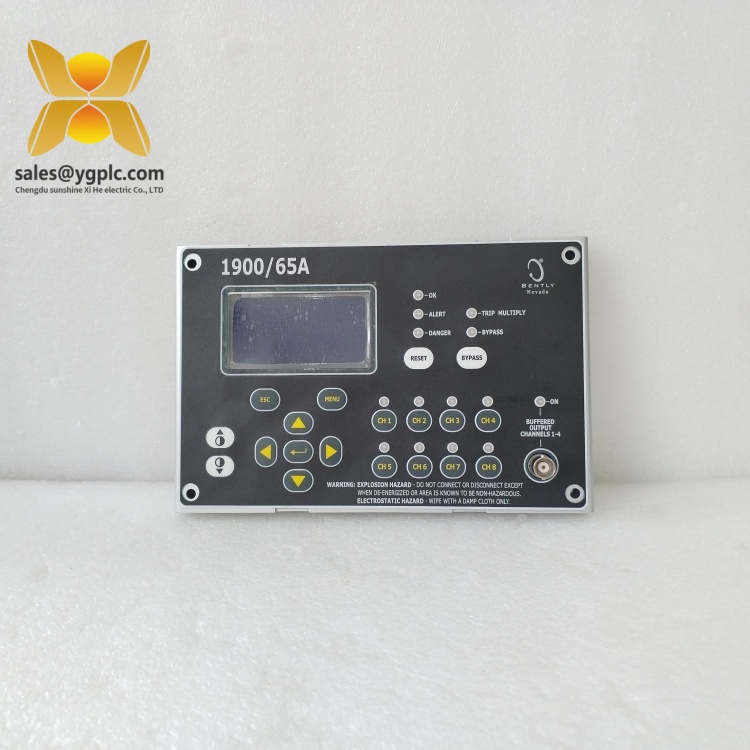
Related Models
- BENTLY 3500/20 – Alternative RIM with basic functionality
- BENTLY 3500/22M – Transient Data Interface module for advanced analytics
- BENTLY 3500/15 – Power Supply Module for 3500 Rack
- BENTLY 3500/40M – Displacement Monitor for shaft vibration and axial position
- BENTLY 3500/45 – Differential Expansion Monitor for thermal growth monitoring
Installation and Maintenance
Before installing the BENTLY 3500/05-01-01-01-00-00, ensure that the 3500 rack is properly grounded and that the power supply module is installed in the leftmost slot. The RIM should be installed in the adjacent slot, with all connections securely tightened. During commissioning, use Bently Nevada’s ADAPT software to configure the module’s parameters, such as frame addressing and communication settings.
For maintenance, inspect the module’s connectors and LED indicators monthly for signs of wear or malfunction. Clean the connectors with a lint-free cloth and apply dielectric grease if necessary. Perform quarterly functional tests by verifying communication with the host computer and checking the status of the front-panel LEDs. Replace the module every 10–15 years, depending on the operating environment, to ensure optimal performance. In harsh environments, such as offshore platforms, consider more frequent inspections and replacements.
Leave a comment
Your email address will not be published. Required fields are marked *